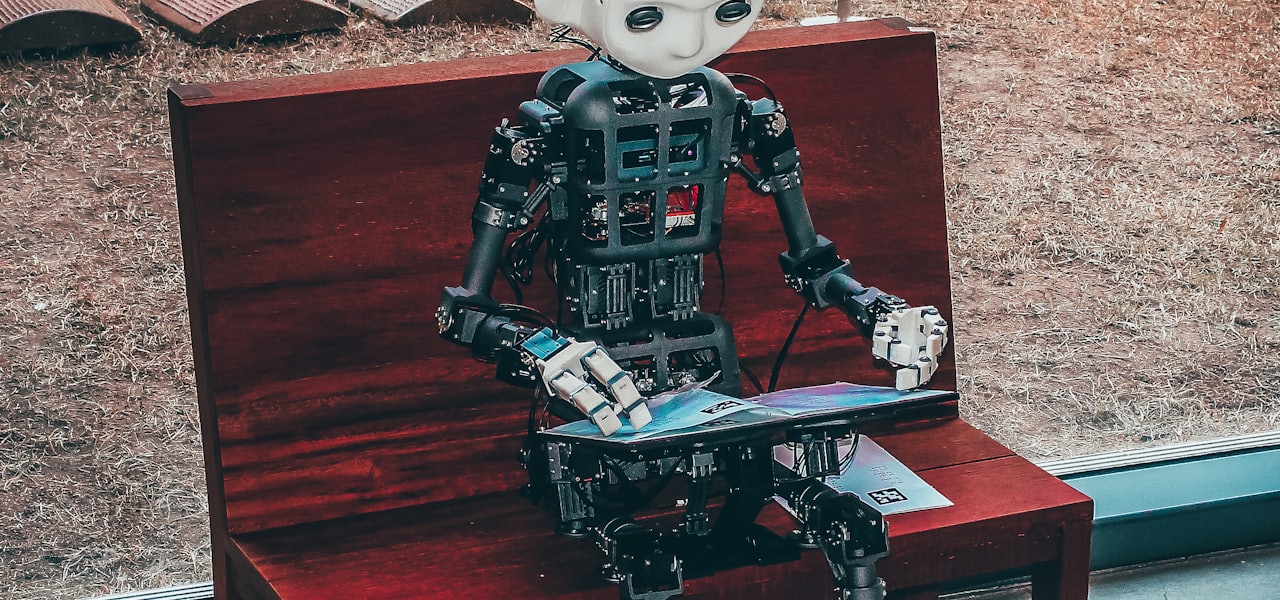
This is a list of Fortran software and tools, including IDEs, compilers, libraries, debugging tools, numerical and scientific computing tools, and related projects. == Fortran compilers == Absoft Pro Fortran — Absoft Pro Fortran is discontinued and ran on Linux and macOS AOCC — from AMD Classic Flang — part of the LLVM Project LLVM Flang — part of the LLVM Project Fortran 77 — Fortran 77 was developed by Digital Equipment Corporation, it is discontinued. G95 – portable open-source Fortran 95 compiler GCC (GNU Fortran) PGI compilers – NVIDIA developed compilers after acquiring The Portland Group IBM XL Fortran — IBM XL Fortran is current and runs on Linux (Power/AIX) and integrates with Eclipse Intel Fortran Compiler – part of Intel OneAPI HPC toolkit LFortran — LFortran is current, cross-platform, and has IDE support. MinGW – cross compiler and forked into Mingw-w64 nAG Fortran Compiler - from nAG Open64 — Open64 is an open-source compiler that has been terminated and ran on Linux Open Watcom — Open Watcom is current, runs on MS-DOS and OS/2, and has IDE support. Oracle Fortran — Oracle Fortran is discontinued, ran on Linux and Solaris. ROSE — source-to-source compiler framework developed at Lawrence Livermore National Laboratory Silverfrost FTN95 — FTN95 from Silverfrost is current, runs on Windows, and has IDE support. == Integrated development environments (IDEs) and editors == Code::Blocks — supports Fortran with plugins Eclipse IDE — with Fortran support via Photran Emacs — extensible text editor with built-in Fortran modes and support for modern tooling via language servers Geany — lightweight cross-platform IDE based on GTK IntelliJ IDEA — cross-platform IDE by JetBrains with Fortran pluggin KDevelop — KDE-based IDE NetBeans — Apache software foundation IDE with Fortran configuration OpenWatcom — IDE and compiler suite for C, C++, and Fortran Simply Fortran — standalone Fortran IDE for Windows, Linux, and macOS Vim — modal text editor with native Fortran syntax support and extensive plugin-based development features Visual Studio — with Intel Fortran integration Visual Studio Code — supports Fortran via extensions == Mathematical libraries == == Scientific libraries == ABINIT — software suite to calculate optical, mechanical, vibrational, and other observable properties of materials Cantera — chemical kinetics, thermodynamics, and transport tool suite CERN Program Library — collection of Fortran libraries for physics applications from CERN CP2K — quantum chemistry and solid-state physics software package for atomistic simulations Dalton — molecular electronic structure program FFTPACK — subroutines for the fast Fourier transform Kinetic PreProcessor – open-source software tool used in atmospheric chemistry MESA — Modules for Experiments in Stellar Astrophysics Nek5000 — MPI parallel higher-order spectral element CFD solver NWChem — open-source high-performance computational chemistry software Octopus — real-space Time-Dependent Density Functional Theory code MODTRAN – model atmospheric propagation of electromagnetic radiation MOLCAS — quantum chemistry software package for multiconfigurational electronic structure calculations NOVAS – software library for astrometry-related numerical computations Physics Analysis Workstation – data analysis and graphical presentation in high-energy physics Quantum ESPRESSO — integrated suite for electronic-structure calculations and materials modeling SIESTA — first-principles materials simulation code using density functional theory Tinker — software tools for molecular design == Debugging and performance tools == GDB — GNU Debugger with Fortran support Valgrind — memory debugging and profiling tool VTune Profiler — performance analysis tool Allinea Forge — debugger and profiler for HPC applications == Build and package management == Autotools — build system supporting Fortran projects CMake — cross-platform build system supporting Fortran Make — build automation tool Spack — package manager for HPC software including Fortran libraries == Machine learning and AI libraries == Athena Fiats (Functional Inference And Training for Surrogates) FNN (Fortran Neural Network) FortNN Fortran-TF-lib (Fortran interface to TensorFlow) FTorch (Fortran interface to PyTorch) MlFortran RoseNNa == Parallel and high-performance computing tools == MPI Fortran bindings — standard interface for distributed-memory parallelism OpenMP — shared-memory parallel programming support through compiler directives Coarray Fortran — parallel programming model introduced in Fortran 2008 ScaLAPACK — parallel linear algebra package built on top of LAPACK == Testing frameworks == FUnit — open-source unit testing framework developed at NASA’s Langley Research Center, for Fortran 90, 95, and 2003. pFUnit — unit testing framework for Fortran, modeled after JUnit == Documentation and code analysis tools == FORD — automatic documentation generator for modern Fortran projects SQuORE — software quality and management platform with code analysis support Understand — static analysis and code comprehension tool for large Fortran projects
Google Books Ngram Viewer
The Google Books Ngram Viewer is an online search engine that charts the frequencies of any set of search strings using a yearly count of n-grams found in printed sources published between 1500 and 2022 in Google's text corpora in English, Chinese (simplified), French, German, Hebrew, Italian, Russian, or Spanish. There are also some specialized English corpora, such as American English, British English, and English Fiction. The program can search for a word or a phrase. The n-grams are matched with the text within the selected corpus, and if found in 40 or more books, are then displayed as a graph. The program supports searches for parts of speech and wildcards. It is routinely used in research. == History == The Ngram Viewer was created by Google software engineers Will Brockman and Jon Orwant , who teamed up with Harvard researchers Jean-Baptiste Michel and Erez Lieberman Aiden. The service was released on December 16, 2010. Before the release, it was difficult to quantify the rate of linguistic change because of the absence of a database that was designed for this purpose, said Steven Pinker, a well-known linguist who was one of the co-authors of the Science paper published on the same day. The Google Books Ngram Viewer was developed in the hope of opening a new window to quantitative research in the humanities field, and the database contained 500 billion words from 5.2 million books publicly available from the very beginning. The intended audience was scholarly, but the Google Books Ngram Viewer made it possible for anyone with a computer to see a graph that represents the diachronic change of the use of words and phrases with ease. Lieberman said in response to The New York Times that the developers aimed to provide even children with the ability to browse cultural trends throughout history. In the Science paper, Lieberman and his collaborators called the method of high-volume data analysis in digitized texts "culturomics". == Usage == Commas delimit user-entered search terms, where each comma-separated term is searched in the database as an n-gram (for example, "nursery school" is a 2-gram or bigram). The Ngram Viewer then returns a plotted line chart. Due to limitations on the size of the Ngram database, only matches found in at least 40 books are indexed. == Limitations == The data sets of the Ngram Viewer have been criticized for their reliance upon inaccurate optical character recognition (OCR) and for including large numbers of incorrectly dated and categorized texts. Because of these errors, and because they are uncontrolled for bias (such as the increasing amount of scientific literature, which causes other terms to appear to decline in popularity), care must be taken in using the corpora to study language or test theories. Furthermore, the data sets may not reflect general linguistic or cultural change and can only hint at such an effect because they do not involve any metadata like date published, author, length, or genre, to avoid any potential copyright infringements. Systemic errors like the confusion of s and f in pre-19th century texts (due to the use of ſ, the long s, which is similar in appearance to f) can cause systemic bias. Although the Google Books team claims that the results are reliable from 1800 onwards, poor OCR and insufficient data mean that frequencies given for languages such as Chinese may only be accurate from 1970 onward, with earlier parts of the corpus showing no results at all for common terms, and data for some years containing more than 50% noise. Guidelines for doing research with data from Google Ngram have been proposed that try to address some of the issues discussed above.
Semantic neural network
Semantic neural network (SNN) is based on John von Neumann's neural network [von Neumann, 1966] and Nikolai Amosov M-Network. There are limitations to a link topology for the von Neumann’s network but SNN accept a case without these limitations. Only logical values can be processed, but SNN accept that fuzzy values can be processed too. All neurons into the von Neumann network are synchronized by tacts. For further use of self-synchronizing circuit technique SNN accepts neurons can be self-running or synchronized. In contrast to the von Neumann network there are no limitations for topology of neurons for semantic networks. It leads to the impossibility of relative addressing of neurons as it was done by von Neumann. In this case an absolute readdressing should be used. Every neuron should have a unique identifier that would provide a direct access to another neuron. Of course, neurons interacting by axons-dendrites should have each other's identifiers. An absolute readdressing can be modulated by using neuron specificity as it was realized for biological neural networks. There’s no description for self-reflectiveness and self-modification abilities into the initial description of semantic networks [Dudar Z.V., Shuklin D.E., 2000]. But in [Shuklin D.E. 2004] a conclusion had been drawn about the necessity of introspection and self-modification abilities in the system. For maintenance of these abilities a concept of pointer to neuron is provided. Pointers represent virtual connections between neurons. In this model, bodies and signals transferring through the neurons connections represent a physical body, and virtual connections between neurons are representing an astral body. It is proposed to create models of artificial neuron networks on the basis of virtual machine supporting the opportunity for paranormal effects. SNN is generally used for natural language processing. == Related models == Computational creativity Semantic hashing Semantic Pointer Architecture Sparse distributed memory
Vision transformer
A vision transformer (ViT) is a transformer designed for computer vision. A ViT decomposes an input image into a series of patches (rather than text into tokens), serializes each patch into a vector, and maps it to a smaller dimension with a single matrix multiplication. These vector embeddings are then processed by a transformer encoder as if they were token embeddings. ViTs were designed as alternatives to convolutional neural networks (CNNs) in computer vision applications. They have different inductive biases, training stability, and data efficiency. Compared to CNNs, ViTs are less data efficient, but have higher capacity. Some of the largest modern computer vision models are ViTs, such as one with 22B parameters. Subsequent to its publication, many variants were proposed, with hybrid architectures with both features of ViTs and CNNs. ViTs have found application in image recognition, image segmentation, weather prediction, and autonomous driving. == History == Transformers were introduced in Attention Is All You Need (2017), and have found widespread use in natural language processing. A 2019 paper applied ideas from the Transformer to computer vision. Specifically, they started with a ResNet, a standard convolutional neural network used for computer vision, and replaced all convolutional kernels by the self-attention mechanism found in a Transformer. It resulted in superior performance. However, it is not a Vision Transformer. In 2020, an encoder-only Transformer was adapted for computer vision, yielding the ViT, which reached state of the art in image classification, overcoming the previous dominance of CNN. The masked autoencoder (2022) extended ViT to work with unsupervised training. The vision transformer and the masked autoencoder, in turn, stimulated new developments in convolutional neural networks. Subsequently, there was cross-fertilization between the previous CNN approach and the ViT approach. In 2021, some important variants of the Vision Transformers were proposed. These variants are mainly intended to be more efficient, more accurate or better suited to a specific domain. Two studies improved efficiency and robustness of ViT by adding a CNN as a preprocessor. The Swin Transformer achieved state-of-the-art results on some object detection datasets such as COCO, by using convolution-like sliding windows of attention mechanism, and the pyramid process in classical computer vision. == Overview == The basic architecture, used by the original 2020 paper, is as follows. In summary, it is a BERT-like encoder-only Transformer. The input image is of type R H × W × C {\displaystyle \mathbb {R} ^{H\times W\times C}} , where H , W , C {\displaystyle H,W,C} are height, width, channel (RGB). It is then split into square-shaped patches of type R P × P × C {\displaystyle \mathbb {R} ^{P\times P\times C}} . For each patch, the patch is pushed through a linear operator, to obtain a vector ("patch embedding"). The position of the patch is also transformed into a vector by "position encoding" (the paper tried no embedding, 1D embedding, 2D embedding, and relative embedding: 1D was adopted). The two vectors are added, then pushed through several Transformer encoders. The attention mechanism in a ViT repeatedly transforms representation vectors of image patches, incorporating more and more semantic relations between image patches in an image. This is analogous to how in natural language processing, as representation vectors flow through a transformer, they incorporate more and more semantic relations between words, from syntax to semantics. The above architecture turns an image into a sequence of vector representations. To use these for downstream applications, an additional head needs to be trained to interpret them. For example, to use it for classification, one can add a shallow MLP on top of it that outputs a probability distribution over classes. The original paper uses a linear-GeLU-linear-softmax network. == Variants == === Original ViT === The original ViT was an encoder-only Transformer supervise-trained to predict the image label from the patches of the image. As in the case of BERT, it uses a special token
ChatScript
ChatScript is a combination Natural Language engine and dialog management system designed initially for creating chatbots, but is currently also used for various forms of NL processing. It is written in C++. The engine is an open source project at SourceForge. and GitHub. ChatScript was written by Bruce Wilcox and originally released in 2011, after Suzette (written in ChatScript) won the 2010 Loebner Prize, fooling one of four human judges. == Features == In general ChatScript aims to author extremely concisely, since the limiting scalability of hand-authored chatbots is how much/fast one can write the script. Because ChatScript is designed for interactive conversation, it automatically maintains user state across volleys. A volley is any number of sentences the user inputs at once and the chatbots response. The basic element of scripting is the rule. A rule consists of a type, a label (optional), a pattern, and an output. There are three types of rules. Gambits are something a chatbot might say when it has control of the conversation. Rejoinders are rules that respond to a user remark tied to what the chatbot just said. Responders are rules that respond to arbitrary user input which is not necessarily tied to what the chatbot just said. Patterns describe conditions under which a rule may fire. Patterns range from extremely simplistic to deeply complex (analogous to Regex but aimed for NL). Heavy use is typically made of concept sets, which are lists of words sharing a meaning. ChatScript contains some 2000 predefined concepts and scripters can easily write their own. Output of a rule intermixes literal words to be sent to the user along with common C-style programming code. Rules are bundled into collections called topics. Topics can have keywords, which allows the engine to automatically search the topic for relevant rules based on user input. == Example code == Words starting with ~ are concept sets. For example, ~fruit is the list of all known fruits. The simple pattern (~fruit) reacts if any fruit is mentioned immediately after the chatbot asks for favorite food. The slightly more complex pattern for the rule labelled WHATMUSIC requires all the words what, music, you and any word or phrase meaning to like, but they may occur in any order. Responders come in three types. ?: rules react to user questions. s: rules react to user statements. u: rules react to either. ChatScript code supports standard if-else, loops, user-defined functions and calls, and variable assignment and access. == Data == Some data in ChatScript is transient, meaning it will disappear at the end of the current volley. Other data is permanent, lasting forever until explicitly killed off. Data can be local to a single user or shared across all users at the bot level. Internally all data is represented as text and is automatically converted to a numeric form as needed. === Variables === User variables come in several kinds. Variables purely local to a topic or function are transient. Global variables can be declared as transient or permanent. A variable is generally declared merely by using it, and its type depends on its prefix ($, $$, $_). === Facts === In addition to variables, ChatScript supports facts – triples of data, which can also be transient or permanent. Functions can query for facts having particular values of some of the fields, making them act like an in-memory database. Fact retrieval is very quick and efficient the number of available in-memory facts is largely constrained to the available memory of the machine running the ChatScript engine. Facts can represent record structures and are how ChatScript represents JSON internally. Tables of information can be defined to generate appropriate facts. The above table links people to what they invented (1 per line) with Einstein getting a list of things he did. == External communication == ChatScript embeds the Curl library and can directly read and write facts in JSON to a website. == Server == A ChatScript engine can run in local or server mode. == Pos-tagging, parsing, and ontology == ChatScript comes with a copy of English WordNet embedded within, including its ontology, and creates and extends its own ontology via concept declarations. It has an English language pos-tagger and parser and supports integration with TreeTagger for pos-tagging a number of other languages (TreeTagger commercial license required). == Databases == In addition to an internal fact database, ChatScript supports PostgreSQL, MySQL, MSSQL and MongoDB both for access by scripts, but also as a central filesystem if desired so ChatScript can be scaled horizontally. A common use case is to use a centralized database to host the user files and multiple servers to scale the ChatScript engine. == JavaScript == ChatScript also embeds DukTape, ECMAScript E5/E5.1 compatibility, with some semantics updated from ES2015+. == Spelling Correction == ChatScript has built-in automatic spell checking, which can be augmented in script as both simple word replacements or context sensitive changes. With appropriate simple rules you can change perfect legal words into other words or delete them. E.g., if you have a concept of ~electronic_goods and don't want an input of Radio Shack (a store name) to be detected as an electronic good, you can get the input to change to Radio_Shack (a single word), or allow the words to remain but block the detection of the concept. This is particularly useful when combined with speech-to-text code that is imperfect, but you are familiar with common failings of it and can compensate for them in script. == Control flow == A chatbot's control flow is managed by the control script. This is merely another ordinary topic of rules, that invokes API functions of the engine. Thus control is fully configurable by the scripter (and functions exist to allow introspection into the engine). There are pre-processing control flow and post-processing control flow options available, for special processing.
Kleene star
In formal language theory, the Kleene star (or Kleene operator or Kleene closure) refers to two related unary operations, that can be applied either to an alphabet of symbols or to a formal language, a set of strings (finite sequences of symbols). The Kleene star operator on an alphabet V generates the set V of all finite-length strings over V, that is, finite sequences whose elements belong to V; in mathematics, it is more commonly known as the free monoid construction. The Kleene star operator on a language L generates another language L, the set of all strings that can be obtained as a concatenation of zero or more members of L. In both cases, repetitions are allowed. The Kleene star operators are named after American mathematician Stephen Cole Kleene, who first introduced and widely used it to characterize automata for regular expressions. == Of an alphabet == Given an alphabet V {\displaystyle V} , define V 0 = { ε } {\displaystyle V^{0}=\{\varepsilon \}} (the set consists only of the empty string), V 1 = V , {\displaystyle V^{1}=V,} and define recursively the set V i + 1 = { w v : w ∈ V i and v ∈ V } {\displaystyle V^{i+1}=\{wv:w\in V^{i}{\text{ and }}v\in V\}} for each i > 0 , {\displaystyle i>0,} where w v {\displaystyle wv} denotes the string obtained by appending the single character v {\displaystyle v} to the end of w {\displaystyle w} . Here, V i {\displaystyle V^{i}} can be understood to be the set of all strings of length exactly i {\displaystyle i} , with characters from V {\displaystyle V} . The definition of Kleene star on V {\displaystyle V} is V ∗ = ⋃ i ≥ 0 V i = V 0 ∪ V 1 ∪ V 2 ∪ V 3 ∪ V 4 ∪ ⋯ . {\displaystyle V^{}=\bigcup _{i\geq 0}V^{i}=V^{0}\cup V^{1}\cup V^{2}\cup V^{3}\cup V^{4}\cup \cdots .} == Of a language == Given a language L {\displaystyle L} (any finite or infinite set of strings), define L 0 = { ε } {\displaystyle L^{0}=\{\varepsilon \}} (the language consisting only of the empty string), L 1 = L , {\displaystyle L^{1}=L,} and define recursively the set L i + 1 = { w v : w ∈ L i and v ∈ L } {\displaystyle L^{i+1}=\{wv:w\in L^{i}{\text{ and }}v\in L\}} for each i > 0 , {\displaystyle i>0,} where w v {\displaystyle wv} denotes the string obtained by concatenating w {\displaystyle w} and v {\displaystyle v} . Here, L i {\displaystyle L^{i}} can be understood to be the set of all strings that can be obtained by concatenating exactly i {\displaystyle i} strings from L {\displaystyle L} , allowing repetitions. The definition of Kleene star on L {\displaystyle L} is L ∗ = ⋃ i ≥ 0 L i = L 0 ∪ L 1 ∪ L 2 ∪ L 3 ∪ L 4 ∪ ⋯ . {\displaystyle L^{}=\bigcup _{i\geq 0}L^{i}=L^{0}\cup L^{1}\cup L^{2}\cup L^{3}\cup L^{4}\cup \cdots .} == Kleene plus == In some formal language studies, (e.g. AFL theory) a variation on the Kleene star operation called the Kleene plus is used. The Kleene plus omits the V 0 {\displaystyle V^{0}} or L 0 {\displaystyle L^{0}} term in the above unions. In other words, the Kleene plus on V {\displaystyle V} is V + = ⋃ i ≥ 1 V i = V 1 ∪ V 2 ∪ V 3 ∪ ⋯ , {\displaystyle V^{+}=\bigcup _{i\geq 1}V^{i}=V^{1}\cup V^{2}\cup V^{3}\cup \cdots ,} or V + = V ∗ V . {\displaystyle V^{+}=V^{}V.} == Examples == Example of Kleene star applied to a set of strings: {"ab","c"} = { ε, "ab", "c", "abab", "abc", "cab", "cc", "ababab", "ababc", "abcab", "abcc", "cabab", "cabc", "ccab", "ccc", ...}. Example of Kleene star applied to a set of strings without the prefix property: {"a","ab","b"} = { ε, "a", "ab", "b", "aa", "aab", "aba", "abab", "abb", "ba", "bab", "bb", ...};In this example, the string "aab" can be obtained in two different ways. The Sardinas-Patterson algorithm can be used to check for a given V whether any member of V can be obtained in more than one way. Example of Kleene and Kleene plus applied to a set of characters (following the C programming language convention where a character is denoted by single quotes and a string is denoted by double quotes): {'a', 'b', 'c'} = { ε, "a", "b", "c", "aa", "ab", "ac", "ba", "bb", "bc", "ca", "cb", "cc", "aaa", "aab", ...}. {'a', 'b', 'c'}+ = { "a", "b", "c", "aa", "ab", "ac", "ba", "bb", "bc", "ca", "cb", "cc", "aaa", "aab", ...}. == Properties == If V {\displaystyle V} is any finite or countably infinite set of characters, then V ∗ {\displaystyle V^{}} is a countably infinite set. As a result, each formal language over a finite or countably infinite alphabet Σ {\displaystyle \Sigma } is countable, since it is a subset of the countably infinite set Σ ∗ {\displaystyle \Sigma ^{}} . ( L ∗ ) ∗ = L ∗ {\displaystyle (L^{})^{}=L^{}} , which means that the Kleene star operator is an idempotent unary operator, as ( L ∗ ) i = L ∗ {\displaystyle (L^{})^{i}=L^{}} for every i ≥ 1 {\displaystyle i\geq 1} . V ∗ = { ε } {\displaystyle V^{}=\{\varepsilon \}} , if V {\displaystyle V} is the empty set ∅. For the version of the Kleene star operator on languages, L ∗ = { ε } {\displaystyle L^{}=\{\varepsilon \}} when L {\displaystyle L} is either the empty set ∅ or the singleton set { ε } {\displaystyle \{\varepsilon \}} . == Generalization == Strings form a monoid with concatenation as the binary operation and ε the identity element. In addition to strings, the Kleene star is defined for any monoid. More precisely, let (M, ⋅) be a monoid, and S ⊆ M. Then S is the smallest submonoid of M containing S; that is, S contains the neutral element of M, the set S, and is such that if x,y ∈ S, then x⋅y ∈ S. Furthermore, the Kleene star is generalized by including the -operation (and the union) in the algebraic structure itself by the notion of complete star semiring.
Pandorabots
Pandorabots, Inc. is an artificial intelligence company that runs a web service for building and deploying chatbots. Pandorabots implements and supports development of the Artificial Intelligence Markup Language and makes portions of its code accessible for free. The Pandorabots Platform is "one of the oldest and largest chatbot hosting services in the world", allowing creation of virtual agents to hold human-like text or voice chats with consumers. The platform is written in Allegro Common LISP. == Use Cases == Common use cases include advertising, virtual assistance, e-learning, entertainment and education. The platform has also been used by academics and universities use the platform for teaching and research.